



What Is The Best Entity For A Small Business?
For small business owners in any industry, choosing the right entity type is a critical decision. That’s because the structure of the organization determines so much else, like administrative requirements, personal liability, and taxes. In fact, the choice is one of the most important decisions for any small business.
The legal structure of the enterprise affects taxes, personal liability, and administrative requirements.But what is the best business entity for a small business in today’s complex economic environment? The information below answers that all-important question in plain language, with clear outlines about how each entity operates, pays its taxes, and more. Owners of small companies need to know how to select a path that aligns with their resources, goals, long-term vision, and risk tolerance.
Learn more about our CorpBuilderPRO Business Formation Solutions
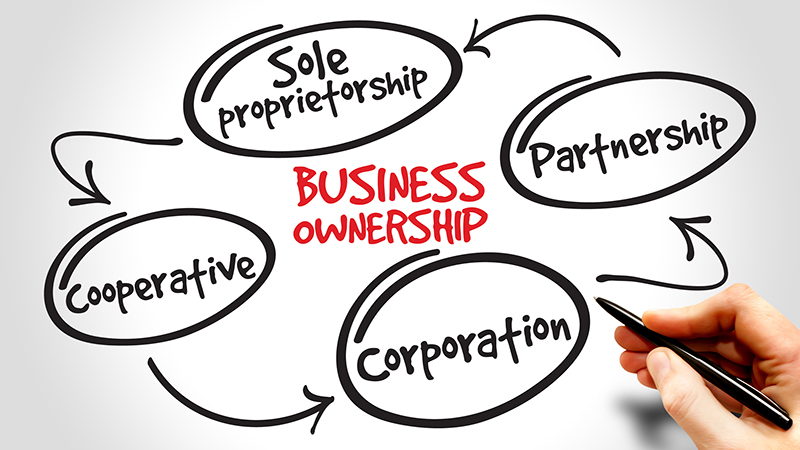
Answering the question, “What is the best business entity for a small business?” entails four general categories, namely the sole proprietorship, partnership, LLC (limited liability company), and corporation. Here are the pertinent details about how each one operates, deals with taxes, and handles legal liability. Plus, each section concludes with a brief listing of the pros and cons for each entity type.
Sole Proprietorship: For Solo Owners Who Prefer Simplicity & Flexibility
The beauty of the sole proprietorship is its simplicity. Every year, millions of entrepreneurs venture forth and start their own companies as solo owners. For them, knowing what the best business entity is for a small business is a simple question that has a simple answer: the sole proprietorship. One person can do all the work. There are no separate legal entities involved between the owner and the company. All income and losses from the enterprise are reported directly on personal income tax returns.
It’s no wonder the SP is so popular for people who want to test-drive a business idea or operate a side hustle to earn a few extra dollars. Startup costs are minimal, as is paperwork. Taxes are also a breeze; they’re subject to personal rates with an additional “self-employment tax” rate on net earnings of the business. What’s the downside? Owners are personally liable for losses, debts, and legal claims against the company. That means personal assets, like your private home or vehicles, could be at risk if you get sued and lose.
Pros:
- There are no ongoing formalities after a quick setup..
- Owners enjoy full decision-making power and 100% control.
- There is no tax at the entity level; every dollar is passed through to the owner’s personal income tax return.
- Easy to set up with minimal ongoing formalities.
- Detailed records help owners minimize the tax bite by offsetting income with valid deductions and expenses.
- Owners can avoid IRS penalties by paying their taxes quarterly.
Cons:
- Owners hold unlimited legal, financial, and personal liability for the business’s lawsuits and debts.
- It can be a challenge to raise money because the SP is not a separate legal entity.
- Customers might view a sole proprietorship as a less credible type of entity compared to LLCs and corporations.
- Owners pay SE (self-employment) tax on net earnings after deductions.
- Partnerships: Shared Responsibility & Ownership
In legal parlance, a partnership is an entity operated by two or more people who share losses, profits, and ownership. While there are many kinds of partnerships, they all feature pass-through income, no tax at the entity level, shared management, and shared financial risk. Here are the pertinent pros and cons.
Pros:
- Partners can combine their expertise and work hours.
- Pass-through taxation can mean no tax at the entity level.
- Profit-sharing arrangements and operating structures are very flexible.
Cons:
- Without a clear operating agreement, disputes can arise.
- General partners can have full personal liability.
- With multiple partners, there can be a need for complex agreements.
- Limited Liability Company (LLC): Flexible Liability and “Pass-Through” Taxation
LLCs are popular due to their flexibility. Owners can opt to be taxed as corporations. Single-member LLCs get taxed as sole proprietorships, and multi-member LLCs are treated as partnerships. Personal assets of owners are protected from business debts. Here are their relevant pros and cons.
Pros:
- Members enjoy limited liability.
- Income passes through by default, but owners can opt to be taxed as corporations.
- In most cases, there are minimal setup formalities.
Cons:
- Owners who choose to be taxed as partnerships and SPs can be hit with self-employment tax rates.
- Some states require franchise taxes and annual fees.
- Disputes can arise if there are no clear-cut operating agreements.
- Corporations: Possible Tax Benefits and Clear-Cut Structure
The shortest legal definition of the term “corporation,” is this: It’s a separate legal entity that is owned by its shareholders. However, there are two very common kinds of corporations that small business owners tend to prefer. They’re called C corporations and S corporations. In common parlance, people call them “C corps” and “S corps.”
What’s the difference? C corps are double taxed. In other words, the entity itself pays tax, and the shareholders also pay tax on the dividends they receive. C corps must file Form 1120 and pay tax on profits; dividends get taxed again at the shareholder level. S corps handle taxes in a completely different way. They are called pass-through entities because there is no tax at the entity level, only at the shareholder level.
Note that both profits and losses “pass through” to each shareholder’s personal tax returns if they meet eligibility requirements. Both S and C corps must adopt bylaws, hold regular meetings, issue stock, and keep detailed minutes of meetings. What is the best business entity for a small business? Sometimes, it’s either an S corp or a C corp.
Pros:
- Excellent liability protection for owners.
- Owners can issue stock or appeal to investors to boost the total amount of available capital.
- At the corporate level, owners can legally create retirement plans and fringe benefits for themselves.
Cons:
- Ongoing administrative and compliance expenses can be high.
- If profits are distributed to shareholders, C corps are double-taxed.
- For S corps, there are very strict rules about eligibility and ownership.
- There are strict compensation rules for employees who are also shareholders.
- Rules vary widely from state to state. Some enforce annual fees and minimum tax payments.
Essential Facts & Takeaways
So, what is the best business entity for a small business? In nearly all cases, the answer comes down to an owner’s goals, specifically in terms of liability, tax treatment of earnings, and long-term growth plans. However, in some states and jurisdictions, owners must abide by local laws when choosing an entity type. Always check with licensed, competent legal professionals to determine what the situation is.
Here are the main things to keep in mind:
- Sole proprietorship is simple but comes with total personal liability.
- For shared ownership and various degrees of liability protection, partnerships and LLCs are the way to go.
- For the ultimate in liability protection and the chance for unlimited growth potential, corporations get the job done, but they also carry additional administrative expenses and complex tax considerations.
See more about our CorpBuilderPRO Business Formation Solutions
Your own answer to the question, “What is the best business entity for a small business” depends on your risk tolerance, goals, plans for growth, and desire for simple or complex tax filing.
Need More Information?
Want to know more about how we can help you set up your business entity with our incorporation services? Call now for your FREE CorpBuilderPRO consultation—(562) 436-2600.